Friday, August 26, 2011

KRIBI HOLIDAY


Lobe Falls


Kribi port


Kribi is a beautiful beach town in the South Region of Cameroon, a few hours from Equatorial Guinea.  It has miles and miles of fine white sand beaches lined by palm trees and roaring ocean waves.  Along the beaches are small shacks with eager chefs, ready to treat you to freshly grilled shrimp or fish.  The town itself is the second largest port after Douala, hosting boats large and small for all types of fishing adventures.  The fish market is filled with vendors, displaying a dozen different types of fish which you may select for a quick and easy meal while watching the boats and pirogues come and go.


River Life

 The name Kribi is derived from the word “kiridi”, which translates as “small men”, referring to the “Pygmies” who were the original inhabitants of this region. Traditionally these people have lived as hunters and gatherers in the forest exchanging their resources for cultivated foods.  The Pygmies do not view themselves as one culture and come from a variety of ethno-linguistic groups, the largest one being the Baka. Most Pygmies continue to live a partially nomadic life, while having been pushed into a more sedentary lifestyle through logging companies and deforestation. They typically follow their traditional religions which include a forest spirit and hold celebrations marking rites of passage. Many tourists come here to launch upriver by dug-out canoes (pirogues), deep into the forest jungle.  Within a day one can come upon Pygmy villages and spend the night.  I opted for a 2 hour upriver trip, to experience the deep vibrant green, the jungle sounds, and a glance or two at the tree-swinging monkeys.


On the edge of the town, where I stayed, are the beautiful Lobe Waterfalls, one of the few falls that plunge directly into the ocean.   It is a lovely sight and there are little artisan shops and restaurants around, ala palm frond architecture, offering more tastes of the local culture.  Swimming around there is very inviting but the tide makes a dramatic difference in the safety factor.  The drop-offs can be sudden and dramatic.  Unfortunately while I was there, a drowning occurred as a non-swimmer found himself over his head.  Children scatter along the beach at low tide, hunting crabs, and fisherman are in their boats morning and evening to bring in the catch of the day.  They do work hard, but it also seems that this lifestyle ensures that one will never go hungry.

It is a great place to get-away from it all, enjoy the finest of white sand beaches, go to sleep and awake with the sounds of the thundering waves, and eat lots and lots of wonderful fish.


Wednesday, August 3, 2011

INTERTRIBAL WARS


drum lessons

Beloved Colleague Amy


Hiking Buddies


Contentment


View from my back porch


Rainy Season at my house


Dance classes at Kaye's


Posted by Picasa

Setting of prior war

INTERTRIBAL CONFLICTS


The Northwest Region of Cameroon has a long and tragic history of intertribal wars, most often happening between neighboring villages.  I have seen the results both 15 years post-conflict and 1 month post-conflict in several villages.  Most recently, I visited a village that had 400 of its houses burned down only 2 months previously. A few neighboring villages, spurred on by their Fon/chief, spent two days burning houses and stealing animals and goods from an entire village.  The villagers had little to no warning and fled to their Fon’s palace with only the clothes on their backs.  They now sit with only the remaining mud-brick walls and some aluminum roofing recently provided by an NGO.  Their stored foods are gone, their animals are gone, and their children now have no money for school.  Their crops are still there, but it will take months before they can harvest them and probably one year before they can start to save money again.  Meanwhile they have to replace everything they lost – furniture, clothes, livestock- which may have taken them a lifetime to gather.  I am now giving psychological support to some villagers who suffered this exact situation 15 years prior.  All of them lost everything they owned, and several lost family members to the battle – sometimes with guns, sometimes machetes. Some still bare the scars from their injuries in the war. All of these counseling group members continue to suffer emotionally from these losses, never recovering the relative wealth that they had, or the sense of purpose and worthiness.  It has devastated the entire community and continuing generations- something that these elders feel guilt and hopelessness about.

Why does this happen?  Cameroon has over 280 ethno-linguistic groups.  Amazingly, you can travel from one neighboring village to the next and often find different dialects. Strangers in taxis who find that they recognize each others names and dialects feel immediate connections.  The tribal identities remain very strong. There is a long history of different tribal groups exiting one territory and situating themselves in another territory – possibly making their neighbors unhappy, or never really being considered legitimate;  Thus the seeds of land-grabbing and conflict.  The NW Region is one of two regions that was run by Great Britain prior to independence.  The other regions were under French rule.  The French disempowered the traditional Fon system, encouraging and promoting elections of local mayors.  The British supported the Fon system of governance (one which is inherited) thus leaving every tribe and village with its own head.  Some territories are wealthier than others, some Fons are greedier and more aggressive than others.  Some Fons will inflame and support their villagers to attack their neighbors, to grab the land and expand their territory.  As in the recent attack, the aggressing village had already expanded its territory through war a couple of generations ago and it seems that they were hoping to accomplish this again.  What seems to be different during this current time period, is that the rule of law is doing more to protect the people and their properties.  Some 40 people from the aggressing village have been put in prison, and there is legal action being taken to return people’s stolen property. Unfortunately though, these wars are far too common and in my one year here, I have heard of several new conflicts in this part of Cameroon.

RANDOM MUSINGS

A poor country means poor infrastructure in the form of public services.  One aspect of this that I feel every day is pedestrian safety….NOT.  There are no sidewalks in most of Cameroon and staying safe while walking means dodging motorcycles and cars every minute.  Pedestrians are lowest in the hierarchy of street-power, with no rights or consideration given to those on foot.  On a five minute walk to work I usually have to jump out of the way of cars and motorbikes at least every 30 seconds as they pull up in front of me or skim by me while we all attempt to dodge the pot holes and mud puddles.

Speaking of mud puddles, we are in the intense phase of the rainy season which means heavy rains every day.  Today it has been raining for 18 hours straight. The dirt road outside my house becomes a mucky, sucky, slippery walk out to the main road.  Often the roads between villages and towns become impassable and it is not uncommon for trucks to be lined up along the roads, digging out or waiting for assistance after becoming stuck.  In a recent 4 hour trip, we went over a patch of road that looked like a mud mogul field.  Dealing with the heavy rains is a way of life here, and people do their best to proceed with business as usual.  Or, they are especially tolerant of delays and cancellations due to weather.  In the dry season, clothes dry on the line in a few hours.  In the wet season it can take days.  In the dry season, a jacket is never needed.  In the wet season, sweats and slippers are welcome items.

There is a dancing teacher here who has a class full of ex-pats and Cameroonians.  He also comes to my home and humors me and my friends as we attempt to learn salsa, samba, rock and roll, and a few African dances (Makossa and Bottle Dance).  It is all great fun, combining exercise and laughter.  I also purchased a beautiful African drum and receive drumming lessons whenever I can.  There are some gifted artists and musicians in the area who struggle to find ways to share their talents.

Cammie the kitten is now Cammie the mother of four beautiful babies.  She is a fabulous mother, and the kittens are fat and happy.  They are all promised to loving homes. ( I had prospective owners pass through a series of questions.)  Everyone had to promise that they would FEED the cats, hold them and treat them like a family member.  In Lesotho I had to worry that they might end-up as hats or stew meat.

It is summer school break time so the streets are filled with children who are trying to help their families earn an extra penny or two.  Some kids sit at little booths trying to sell phone time, along side hundreds of other vendors doing exactly the same thing.  Other kids are scurrying around with bags and plates on their heads, carrying bananas, candy, t-shirts, shoes, eggs  - just about anything that can be transported and sold.  Then there are the kids that are doing hard labor- hauling wood and building materials, chopping wood, washing clothes in the streams.  And the ones I don’t see are the thousands and thousands of children who are helping their parents work the land, weeding and harvesting crops.  It isn’t an easy life for children here.


Village Life


Village Water Tap

Big Boys

Tuesday, May 24, 2011

LIFE IN THE NORTHWEST

BABUNGO

Babungo is a community about 2 hours from Bamenda, complete with Fon (chief), palace and marvelous traditional festivals.  It also has a unique mental health facility combining traditional and western medecines.  The traditional healer who founded this center has since passed on, but it is now being run by two of his children.  It is an inpatient facility housing psychiatric patients and their care-givers.  Each person has their own room with two beds and receives both Western psychiatric medications and herbal medecines developed over centuries by the traditional healers.  They also receive occupational therapies, exercise regimens and opportunities for socialization.  They are fortunate to have won the heart and soul of a VSO volunteer who has been coming there intermittently for the past 7 years providing her psychiatric nursing skills and also has done fund-raising to build the infrastructure of the facility.  It is set in a beautiful rural area with ample space, so the inpatients are allowed the freedom to walk around the grounds, take in the fresh air, and benefit from the peaceful environment. Because it is such a unique and positive example of the blend of traditional and western, one of the two psychiatrists in Cameroon has also taken this facility under his tutelage and comes there on a monthly basis to consult with the staff.  I was very encouraged to see that such a humane and healing environment can exist for the mentally ill in Cameroon.

The March Babungo festival was for the celebration of the return of one of the palace statues that had been away from its home for some time.  It was a gorgeous occasion, complete with drummers, dancers (young and old), snake charmers, and dignitaries. The health center even took the opportunity to do a little advertising of themselves. (See Photos.)


WITCHCRAFT

Having had the opportunity to spend more time in the culture, the stories and beliefs in witchcraft begin to be revealed.   It seems to be deeply embedded in all layers of the culture regardless of education, religious beliefs, or profession.  It is even included in the laws which say that a person CAN be charged with witchcraft – the main problem being the proving of it.  It covers many ills to include illness, infertility, poor harvest, poor school performance, nightmares and insanity.  There is a story of some family members joining together to kill their father as they believed he was casting spells and killing off some of the family members.  Jealousy and greed are said to be motivators behind many harmful and deadly actions on family and neighbors.  The inheritance laws, unfortunately, contribute to some of these sad stories.  Most often the women have no right to inherit the husband’s property, so there are numerous stories of elder brothers trying to kill-off their brothers so they can inherit their brother’s land.  One friend told me that his father died of poisoning and he believes it was done by one of his uncles.  Naturally he is literally scared to death even though his family has been left with nothing.  Different villages have different inheritance laws.  One unique village tradition leaves the properties to the oldest son of the surviving sister (the deceased’s nephew).  One young father from that village told me that he didn’t want to live there as he didn’t want his worldly goods going to a nephew, but to his newly born son.

In the Northwest Region where I am living, property lines continue to be a big source of conflict.  Most of the intertribal conflict between villages is about land-grabbing with neighbors from another tribe coming into the neighboring property, burning the crops, stealing the livestock, destroying the homes, and sometimes injuring or killing the residents.  Because these property lines have never been officially delineated or agreed upon, it can become a hot-spot of contention resulting in death and destruction. There are councils and legal channels to try to mediate these problems, but sometimes the people simply take action into their own hands.


BAMENDA CATTLE MARKET

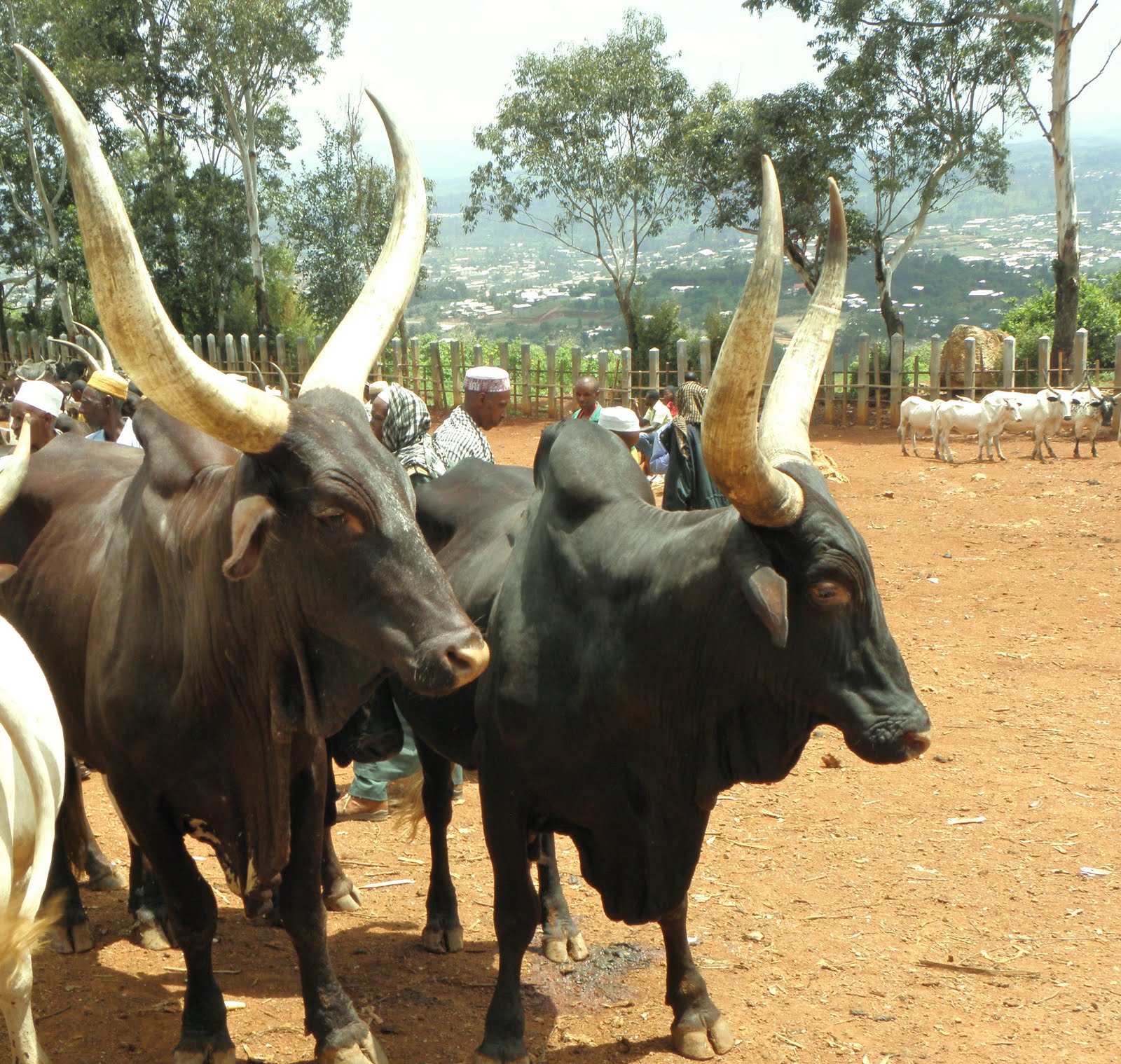
On the lighter side, every Thursday in the hills above Bamenda the cow market is held.  Herders from villages as far as a 2 day walk come with their cattle in the hopes of both buying and selling.  There are hundreds of cows, and dozens of buyers, sellers and middlemen all using their sharp eyes to find the right cows - usually for meat or breeding. 


For those with a vegetarian palate, the fresh fruits are in abundance and marvelous.  Everyday I enter a world filled with mangoes, avocadoes, pineapples, watermelon, papaya, and oranges.  The only thing not grown here, I am told, are the apples which are expensive.  My night guard has transformed my backyard into a garden, growing tomatoes, peppers, beans, carrots, corn, basil, parsley…and other things I am not sure about.  The rains are here, the countryside is a carpet of deep green, and it is beautiful.

Tuesday, April 12, 2011

VACATIONING IN GAMBIA AND SENEGAL


    BEACHES, BUMSTERS AND BIRDS
         
 THE GAMBIA

Gambia Birders
In the 24 hours it took me to travel from my doorstep to the resort hotel in Banjul, Gambia, I had touched into seven African countries.  Not only was my departing flight out of Douala, Cameroon three hours late, but an extra stop in Lagos, Nigeria was thrown in for unexplained reasons.  I managed to see the airports of Nigeria, Ghana, Togo, Benin, Liberia and finally Gambia.  Luckily the airline held the connecting flight for 2 hours so that the dozen of us that needed this flight were able to get on.  The flight over the coastline of West Africa was impressive in that I was viewing hours and hours of white sand beaches.  Along the way were huge rivers creating large deltas dumping into the Atlantic Ocean.  It was green verdant territory, seemingly endless and full of life’s potential.

The Gambia, the smallest continental country in Africa and completely surrounded by Senegal (previously a French colony), is well-touristed by the Brits who had previously been its colonizers.  The country’s borders run up the Gambia River, and the Lonely Planet explains that the borders were determined by how far the British ships could fire cannons onto either side of the shoreline. The short coast-line is made of beautiful white sand beaches and many resorts and hotels, fitting for anyone’s budget.  During the tourist season (dry season), Oct-April, plane loads of tourists are dropped-in every day.  During the rainy season, many places close down, and the local economy goes into scarcity mode for six months.  The people around the tourist industry are well-spoken, friendly, service-oriented, and…hungry.  All of this makes the perfect environment for the culture of the “Bumsters”.
These are the youthful, fit and friendly guys on the beach who are initially offering friendly advice and guidance, to a suggestion for a nightclub, to a proclamation of never-ending love.  It is a kind of industry, with every Local having a story of some friend actually marrying a European woman.  The nightclub/tourist scene is filled with middle-aged white women having the time of their lives with handsome younger Gambian men. Minimally a Gambian man can have a good time dancing and drinking, but the jackpot would be to find a woman who would like to get married and support him (and his immediate and extended family).   It was a scene fraught both with playfulness and desperation.     

Although Gambia is a peaceful country, there is a pall of cautiousness and powerlessness when it comes to politics.  Their current president has been in power since 1994 and he has ruled as an authoritarian during that time. Journalists live in fear and the secret service dampens any type of free speech.  Taxi drivers complain about the rapidly inflated tax rates on gasoline and the ever shrinking income they are able to take home.                                                           

The next leg of my vacation was 5 days and nights up-river on the Gambia.  It was with an organized group and included an entourage of British bird-photographers who had camera lenses longer than my arm – in contrast to pitiful me who had just broken my little Canon Sureshot.  We lived the river life, sleeping in rather large and luxurious tents (complete with shower and flush toilet).  Our days involved excursions on the river to see the 6 hippos, or the multitudes of monkeys and baboons inhabiting the magnificent trees, or the countless extraordinary birds, or a visit to the local village for a “circumcision” ceremony or a drumming lesson.  We were surrounded in peace, birdsongs, timelessness, river-life and stars.  It was truly a get-away.

SENEGAL

Moving from tents back into luxury, I now headed into the Delta of the Saloum River just north over the border into Senegal.  After doing much reading in Lonely Planet and searching on the internet, I chose a hotel with a gorgeous view over the salt-water delta, filled with Mangrove trees and vast blue skies.  I can’t describe it better than the Lonely Planet: “Endless salt and sand plains stretch into the distance and singular baobabs rise from the glistening lands like watchful giants. This gateway to the Sine-Saloum Delta is a zone of shimmering flats, small palm groves, mangrove creeks and lagoons where the river spills artfully into the Atlantic.” There were little day excursions out of the resort, either involving boat trips into the mangroves, or visits to nearby villages. In one village, I saw the compound of a current Peace Corps volunteer – it looked like a pretty ideal set-up. One of the highlights for me was a visit to a 1000 year old Kapok tree (or silk-cotton tree in English).  It was a huge, magnificent, gnarly old Master that could only inspire awe.  The countryside was filled with trees dripping with cashews, avocados, and mangoes. Senegal is noted for its music and one of the traditional stringed instruments is the “kora” (a gourd-like instrument) usually accompanied by a lilting, haunting male voice that “flows like a fluid which irrigates the whole body of society from top to bottom and from ancient history up until the present day.”  As a single woman enjoying a solitary dinner, the kora musician at the resort gave me extra serenades which I was able to soak into every pore. In spite of being surrounded in the luxury of nature, culture and music, it was easy to see that Senegal is quite poor.  Most of the roads were atrocious, the people were in little mud huts, and away from the water, the land was dry and dusty.

After leaving the bubble of beautiful delta and resort life, I made a quickie trip by car to Dakar, the capital city of Senegal and the western most point of continental Africa.  The moment I arrived I met-up with a pre-arranged guide who pushed me onto the ferry just as it was departing for Goree Island.  This is a beautiful island with colonial brick buildings, bougainvillea, narrow alleyways and no cars. Currently the island is a hot-spot of tourism with shops and artists displaying their wares at every turn.  But the most impressive aspect of the island is its history from the Atlantic slave trade. A tour of one of the buildings is led by a guide with heartbreaking stories of the horrors the prisoners endured before they were sent onto the ships that took them on the deadly journey to Brazil and the Caribbean.

Dakar is a city of 2.4 million people and at times it felt like I was in traffic with each one of them.  I booked myself into a B&B outside of town center, run by an American woman who is very helpful in organizing day tours.  But all travels are organized around the traffic (which seems to be pretty much most of the day). I was able to get in a city tour of Dakar, have a visit to Lac Rose (supposedly a rose-hued lake??) and visit a few African art galleries.  I was happy to have seen the city which has many extremely sophisticated aspects including beautiful mosques (90% of the population is Muslim), a magnificent brass statue pointing over the Atlantic, beautiful hotels and large arteries of highways.  Dakar is surrounded by water, so from every hilltop is another astounding view.  My experience of Senegal is mirrored in the words from Lonely Planet, “Senegal presents the paradoxical picture of a nation aiming for the skies yet troubled by severe economic problems. Dakar radiates new prosperity as well as deepening poverty and despair.  While massive infrastructural investment is in progress, global price hikes have pushed large parts of the population deeper into poverty.” 


A BANJUL BIRTHDAY

After three nights in Dakar I returned to Banjul by car and ferry- boat to my now familiar resort hotel.  I was looking forward to a couple more days of doing nothing but walking, swimming and resting on those gorgeous beaches. The time now was close enough to my 60th birthday that I decided to start celebrating.  It was also full-moon time, so each night was spent on the beach at a delightful restaurant with African drummers setting the mood for a most memorable birthday.  My actual birthday was spent en-route back to Cameroon in Lome, Togo at a wonderful French restaurant where the waiter sang me “Happy Birthday” in two languages.  This was a birthday week never to be forgotten.
Gambia River Life


Keur Saloum Resort


Banjul Market

Dakar Views

River Taxis